What Commercial Real Estate Can Learn from Climate Tech Innovation
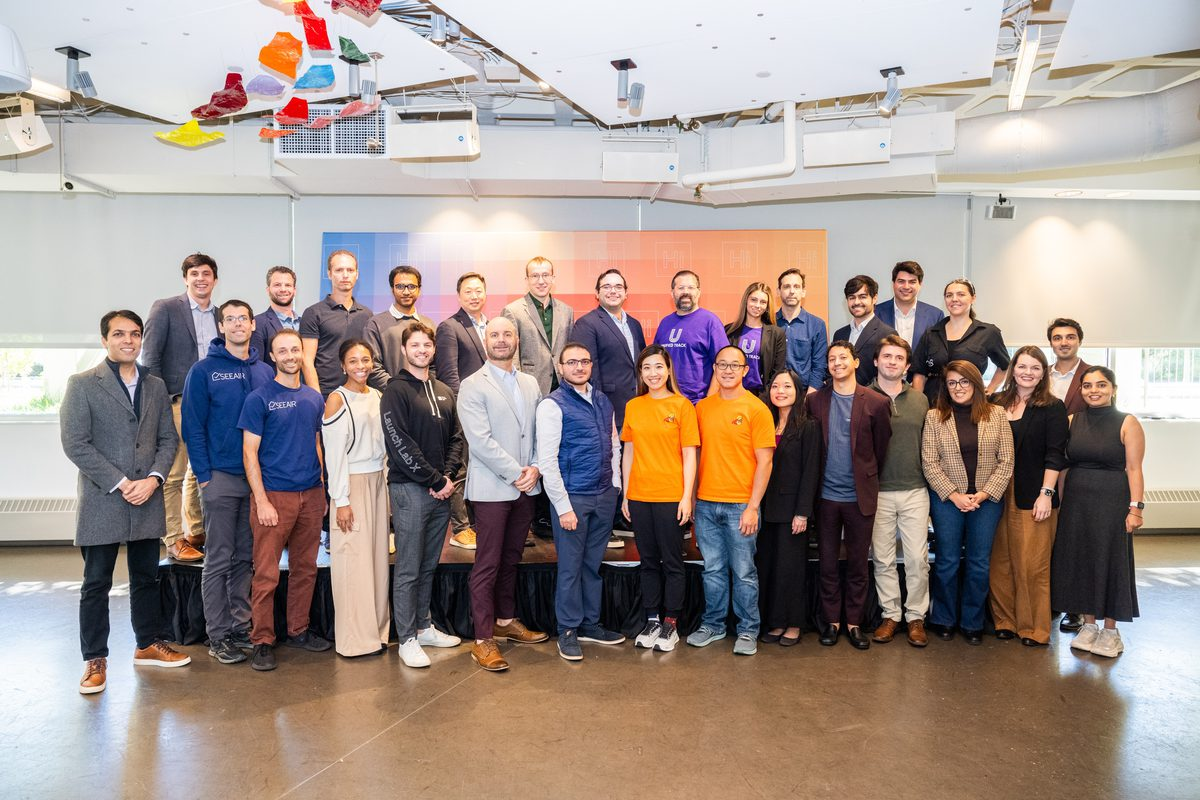
Charli Charging founders Alex Hassen and Stephanie Harbin participating in the Harvard Innovation Labs Launch Lab X accelerator, joining founders from across the climate technology ecosystem to explore solutions shaping the future of energy, infrastructure, and transportation.
Innovation often gets associated with breakthrough technologies, ambitious ideas, and emerging startups. Those elements certainly matter, but one lesson continues to surface across the climate technology sector. The organizations creating lasting impact are solving practical business problems with solutions that organizations can actually implement.
That perspective was reinforced through Charli Charging's participation in the Harvard Innovation Labs Launch Lab X accelerator, where founders from across the climate technology ecosystem explored challenges ranging from energy systems and electrification to building performance and infrastructure modernization. While each company approached a different market, the conversations consistently returned to one question.
How do we create solutions that deliver measurable value?
Commercial real estate has an opportunity to apply that same mindset.
Innovation Should Improve Property Performance
Commercial property owners make investment decisions with a long-term perspective. Every improvement competes for capital and must support the overall performance of the asset.
When evaluating new technologies, owners typically ask practical questions.
Will this improve the tenant experience?
Will this reduce operational costs?
Will this strengthen the property's competitive position?
Will this support future infrastructure needs?
Those questions drive meaningful innovation because they focus on outcomes rather than technology alone.
Climate Technology Is Expanding Beyond Energy
Climate technology is no longer limited to renewable energy projects. Today's innovations include intelligent building systems, battery storage, energy management software, transportation infrastructure, and grid modernization. These technologies increasingly work together to help organizations operate more efficiently while preparing for future demands.
Commercial buildings are becoming part of that evolution.
Properties now play a larger role in how energy is generated, distributed, stored, and consumed. As a result, owners are beginning to evaluate infrastructure through a broader lens, recognizing that transportation, energy, and building operations are becoming more interconnected.
Commercial Real Estate Can Benefit from a Systems Approach
One of the recurring themes throughout Climate Tech Week and the Harvard Innovation Labs community is that successful innovation rarely happens in isolation.
Technology providers, utilities, researchers, municipalities, investors, and property owners each contribute a different perspective. When those perspectives come together, the result is often a stronger solution that addresses both current operational needs and future opportunities.
Commercial real estate benefits from that same collaborative approach.
Rather than viewing EV charging, energy management, parking, or electrical infrastructure as separate projects, owners can evaluate how each investment contributes to the overall performance and resilience of the property.

Launch Lab X brought together founders developing practical solutions for challenges across climate technology, infrastructure, and commercial real estate.
EV Charging Reflects a Broader Shift
EV charging illustrates how infrastructure investments are evolving.
Property owners often begin by evaluating charging equipment, installation costs, and utilization projections. The discussion frequently expands to include tenant attraction, customer convenience, electrical capacity, parking strategy, and long-term asset competitiveness.
The charging stations themselves are only one part of the investment. The larger opportunity lies in creating properties that are better prepared for changing transportation patterns and evolving tenant expectations.
Looking Ahead
Commercial real estate has always rewarded thoughtful, long-term decision making. The same principle is driving momentum across the climate technology sector.
Organizations are investing in solutions that improve efficiency, strengthen infrastructure, and create measurable business value. For commercial property owners, that means looking beyond individual technologies and considering how today's investments support the performance of tomorrow's buildings.
The strongest innovations are rarely the ones that generate the most attention. They are the ones that solve meaningful problems and position organizations for long-term success.