Extended-Range Electric Vehicles: What They Are and Why They Matter for Charging Infrastructure
If you’ve been paying attention to the EV conversation lately, you may have noticed something shifting.
The question is no longer “Will people adopt electric vehicles?”
It’s becoming “What kind of electric vehicles will people actually live with?”
One of the clearest answers emerging from manufacturers is extended-range electric vehicles, often referred to as EREVs.
They’re not hybrids.
They’re not traditional EVs either.
And they have important implications for how charging infrastructure should be planned.
What Is an Extended-Range Electric Vehicle?
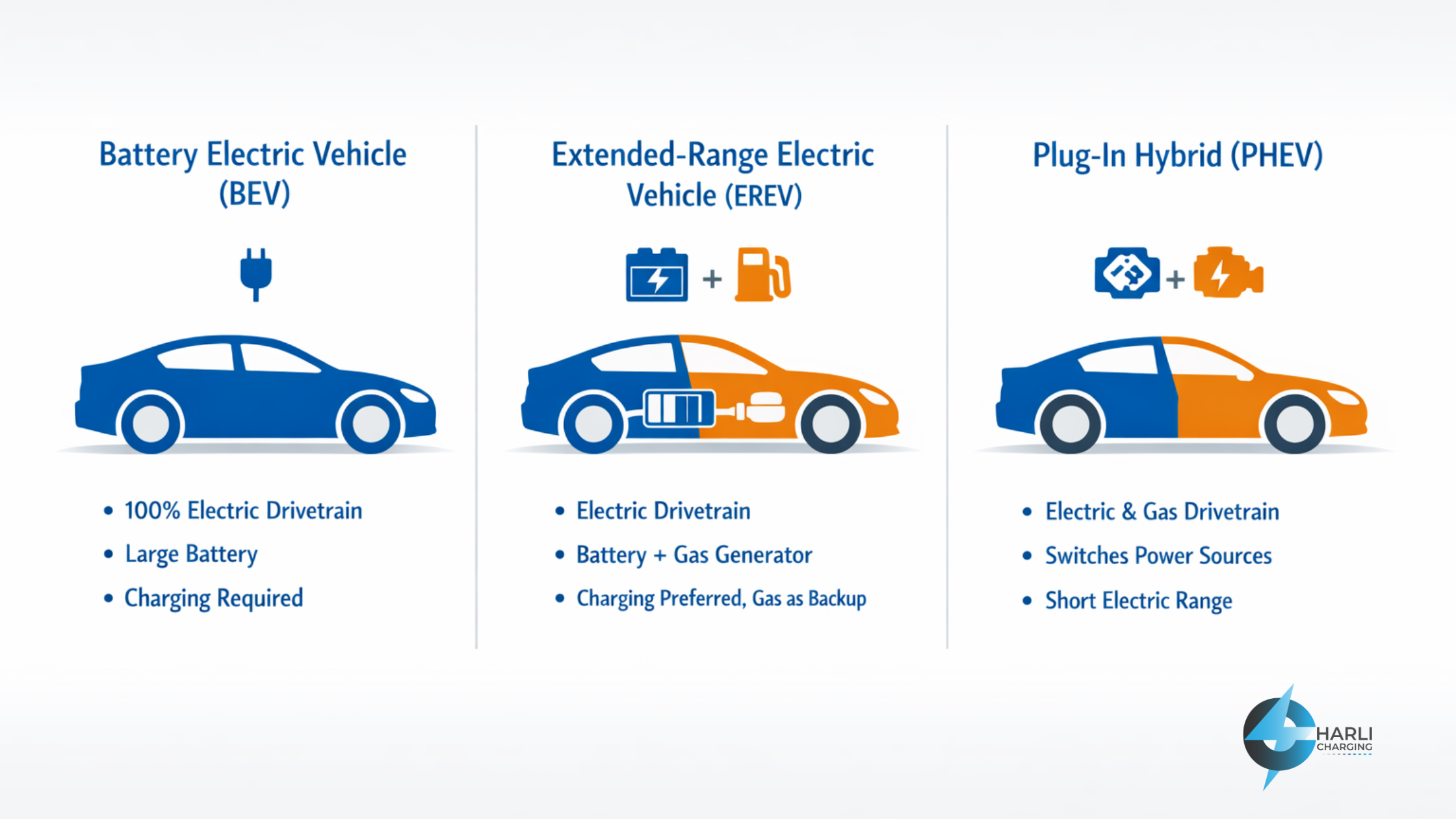
An extended-range electric vehicle drives entirely on electricity.
The wheels are powered by an electric motor.
Acceleration feels like an EV.
The driving experience is fully electric.
The difference is what happens behind the scenes.
EREVs include:
A large battery capable of ~150-200 miles of electric driving
A small onboard generator powered by gasoline
A fuel tank that never directly powers the wheels
The gasoline engine does not drive the vehicle. It simply generates electricity to recharge the battery while driving. Think of it as carrying a backup charger onboard.
How This Differs from Plug-In Hybrids
This distinction matters.
Plug-in hybrids switch between electric and gas powertrains. EREVs do not.
With an EREV:
The electric motor always powers the vehicle
The generator only extends range when needed
The driving feel stays consistent and electric
For drivers, that means fewer compromises and less anxiety around long trips.
Why Automakers Are Moving in This Direction
Battery size has been one of the biggest constraints in EV design.
As batteries get larger:
Vehicles get heavier
Costs rise quickly
Efficiency drops
Towing and hauling become more challenging
Extended-range designs solve this by:
Using smaller, lighter batteries
Maintaining long total range
Reducing cost and material intensity
Making EVs practical for trucks, fleets, and high-mileage drivers
This is why manufacturers are revisiting extended-range platforms for future releases, especially in trucks and larger vehicles.
What This Means for Charging Demand
EREVs change where and how charging happens.
Most extended-range drivers are not fast-charging dependent. On long trips, gasoline becomes the faster option. At highway speeds, the cost of fast charging often matches or exceeds fuel prices anyway.
But here’s the key insight:
Level 2 charging becomes even more important.
Why?
Because charging at:
Home
Apartments
Workplaces
Commercial properties
is still significantly cheaper than gasoline.
Even with a range extender onboard, drivers will prefer to:
Plug in overnight
Top off during the workday
Charge where vehicles are already parked for hours
The generator is a safety net, not a primary strategy.
Extended-Range EVs Expand the EV Market
This technology lowers the barrier to entry for EV adoption.
Drivers who were hesitant because of:
Charging availability
Long road trips
Cold weather performance
Towing or hauling needs
now have a practical option.
More vehicles on the road with electric drivetrains means:
More demand for everyday charging
More pressure on workplaces and multifamily properties
Greater expectations for charging as a standard amenity
The Bigger Picture
Extended-range EVs don’t slow the transition to electric. They accelerate it.
They make EVs viable for more people, in more regions, with fewer compromises.
And they reinforce a simple reality:
The future of charging isn’t just about highway fast chargers. It’s about reliable, convenient Level 2 charging where people already live, work, and spend time.
That’s the infrastructure that makes electric mobility work at scale.