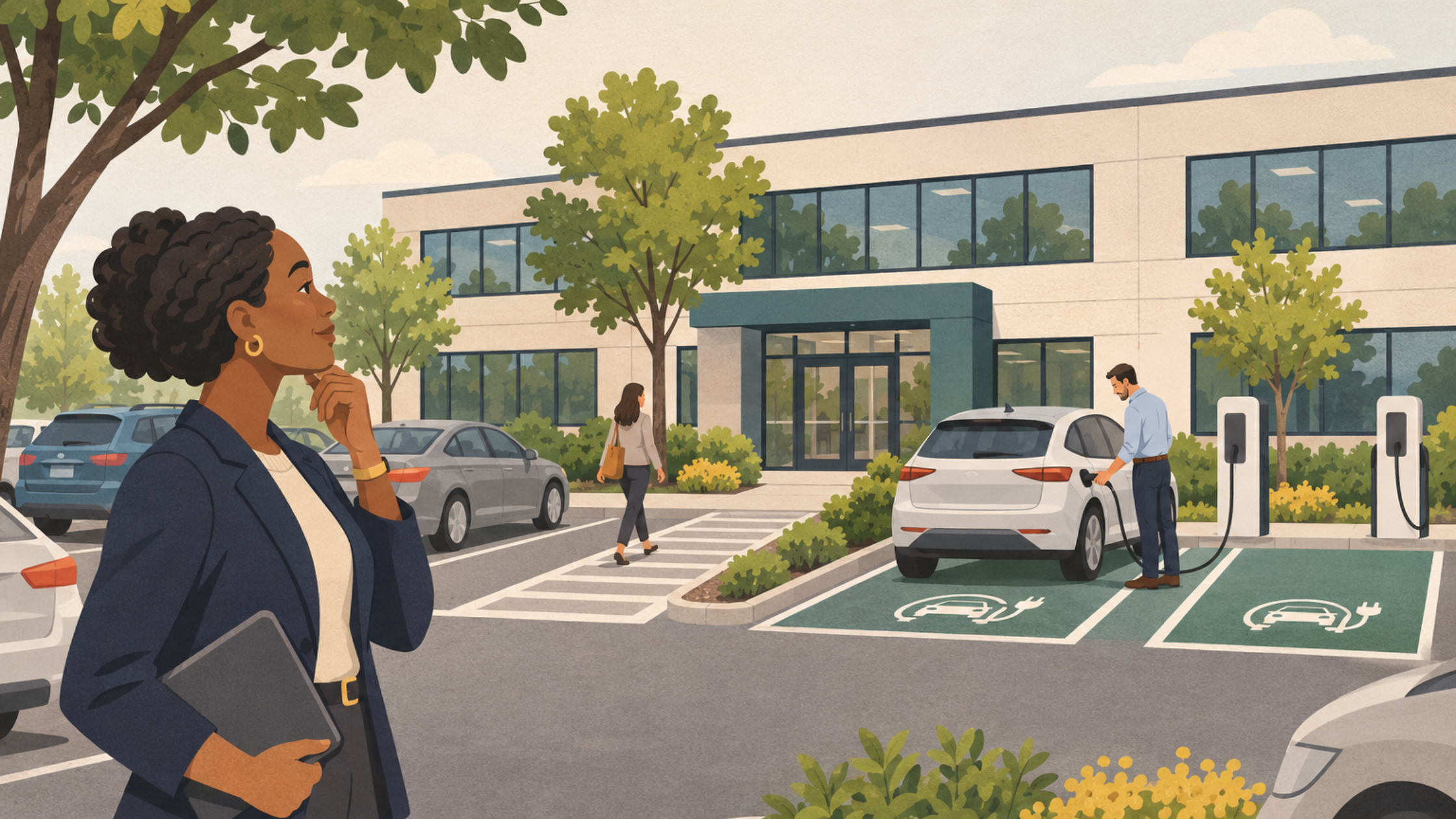
Maybe a tenant has asked about charging. Maybe employees are driving electric vehicles, or you’re looking at the chargers already on your property and wondering whether they still meet your needs.
Before you start comparing equipment, take a look at how your property works on an ordinary day.
Who parks there? How long do they stay? Who would use the chargers? And who on your team would be responsible for them?
Those answers give an EV charging project direction.
Start with the people using your property
An office building, an apartment community, and a retail center can all have parking spaces available for charging. But the people using those spaces have different needs.
An employee may leave their car parked through an entire shift. A resident may park overnight. A customer may stop in long enough to pick up an order.
How long vehicles stay parked helps determine the charging approach worth evaluating. It’s a planning factor highlighted in guidance from Pacific Northwest National Laboratory.
Start with a few questions:
Who needs charging today?
Would it serve employees, residents, customers, visitors, or fleet vehicles?
How long do those drivers typically stay?
When would they need access?
Have people requested charging, or are you still exploring demand?
If you don’t have those answers yet, ask the people who use your property. A short tenant or employee survey can give you a starting point.
Look at parking as it actually happens
A space that looks convenient on a site plan may be occupied all day. A visitor garage may close in the evening. A lot may serve employees during business hours and residents overnight.
Walk the property with those routines in mind.
Where do intended users already park? Are those spaces assigned, shared, or open to the public? Could a driver find the charging area without calling the front desk?
Think through what happens after someone finishes charging, too. Would they reasonably be able to move their vehicle? Who would explain or enforce parking rules?
These are decisions to work through before the spaces become part of someone’s daily routine.
Decide what you want charging to accomplish
“Add EV charging” is a project description. It still leaves room to define what the property needs. You might want to respond to resident requests, support employees, serve visitors, or prepare for electric fleet vehicles. You may already have chargers and want a more dependable experience.
Try finishing this sentence:
“We want charging here so that ______.”
Be specific. “Employees can charge while they work” gives the planning conversation more direction than “We want to offer another amenity.”
It also gives your team something useful to return to when equipment, access, and operating decisions come up.
Make support part of the plan
Picture the first time a driver has a question. Can they easily find help?
Charli provides installation, maintenance, and 24/7 customer support. As you plan charging for your property, consider how drivers will find those support details and what your staff needs to know when someone approaches them.
Your property team can help establish site preferences, such as who can access charging and when parking is available. Charli’s support information should be easy to find, so drivers know where to turn for charging assistance.
Working through those details early helps charging fit into your property’s daily routine.
Bring what you know to the first conversation
You don’t need every answer before discussing a project. A useful starting point is your property’s location, who you expect to serve, typical parking patterns, any existing charging equipment, and the questions your team wants help answering.
From there, the conversation can get more specific about the site and the work needed to evaluate a suitable approach.
At Charli Charging, we help property owners work through the barriers that keep EV infrastructure from succeeding. That starts with understanding what the property needs and how charging would fit into everyday use.
Thinking about charging at your property? Contact us and let’s discuss who parks there, how they use the space, and what you’d like charging to make possible.