Oregon EV Charging Funding Is Open. Here’s What Property Owners Should Know!
Oregon's latest Community Charging Rebates funding round creates new opportunities for EV charging projects at workplaces, multifamily properties and public parking areas. But before applying, organizations should understand what the funding covers and whether their property is a good fit.
Oregon property owners considering EV charging have another funding opportunity to explore. On October 2, the Oregon Department of Transportation (ODOT) opened Round 5 of its Community Charging Rebates program, making approximately $5.5 million available to support eligible charging infrastructure projects across the state.
For organizations that have been considering adding EV charging but haven't been sure how to pay for it, the announcement is worth a closer look. The program is designed to expand charging access at workplaces, multifamily housing and publicly accessible parking areas, helping bring infrastructure to places where people live, work and spend time.
This round also introduces an important change. For the first time, the program includes rebates for public DC fast-charging stations alongside its existing support for Level 2 charging projects. That expands the types of projects organizations can consider, particularly those looking to serve drivers who need a faster charging option.
But as with any funding opportunity, the amount of money available is only part of the story. Property owners still need to understand what their site can support, what the project will require and whether the program's requirements align with what they're trying to accomplish.
What's Available in Round 5?
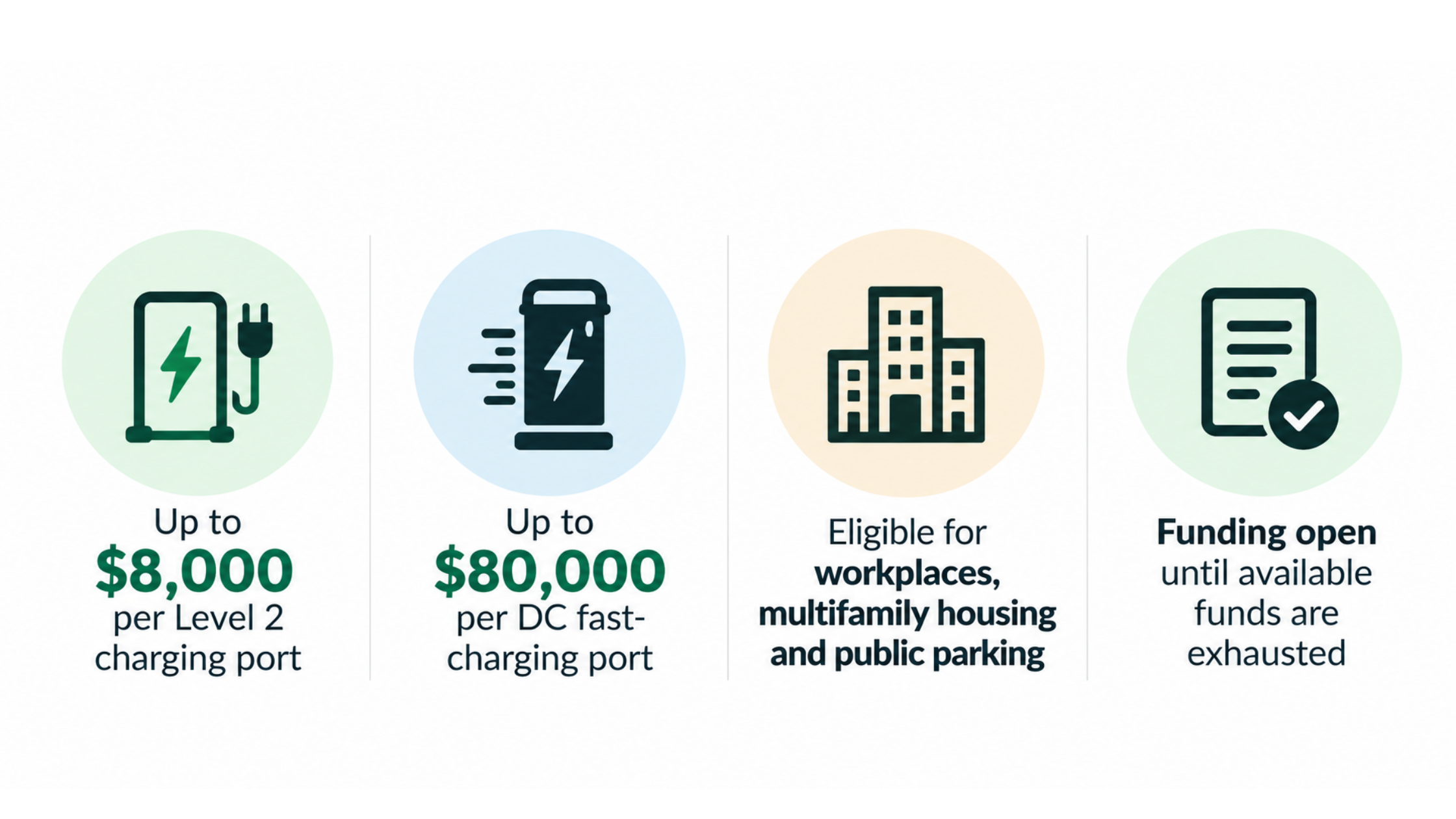
ODOT's fifth funding round offers rebates of up to $8,000 per Level 2 charging port and up to $80,000 per DC fast-charging port. Depending on the charging equipment and project location, rebates may cover up to 80% to 95% of eligible project costs, subject to the program's limits.
That could make a meaningful difference for an organization trying to fit EV charging into its capital budget. A property that previously considered charging infrastructure too expensive may find that outside funding changes the financial picture enough to revisit the project.
However, the funding isn't distributed evenly across every type of charging project. ODOT has indicated that most of the available money in Round 5 is reserved for DC fast charging, with a more limited allocation for Level 2 installations.
The program also continues to emphasize expanding charging access in communities that have historically had fewer options. Seventy percent of program funding is reserved for projects in rural and predominantly low-income communities. This round includes dedicated funding for projects in ten Oregon counties that had not previously received a rebate through the program: Grant, Harney, Jefferson, Klamath, Lake, Morrow, Sherman, Union, Wallowa and Wheeler.
Those details matter because two organizations interested in EV charging may face different funding opportunities depending on where their properties are located and what type of equipment they plan to install.
The Right Funding Starts With the Right Project
One of the first things property owners should consider is how the charging infrastructure will actually be used.
A multifamily property may want to provide charging for residents who park overnight. A workplace could be considering chargers for employees who leave their vehicles parked for several hours. A commercial property with publicly accessible parking may have a different need, particularly if drivers are stopping briefly before continuing their trips.
Those differences influence whether Level 2 or DC fast charging makes sense. They also affect the equipment, electrical infrastructure, installation requirements and ongoing operating costs.
For example, a property owner may see the larger rebate amount available for DC fast charging and assume that installing faster equipment is the better investment. But DC fast charging generally involves higher electrical demands and can require more substantial infrastructure than a Level 2 installation.
If the property primarily serves residents or employees who park for long periods, Level 2 charging may be more appropriate, even if the available rebate is smaller.
The goal should be to identify the charging solution that fits the property and then determine whether funding can help support it, rather than selecting equipment simply because a larger rebate is available.
Before Applying, Understand What Your Property Needs
For organizations that haven't started planning, the opening of a funding round can create pressure to move quickly. That is understandable, especially when funding is limited, but moving quickly without understanding the project can lead to problems.
A preliminary site assessment can help property owners understand existing electrical capacity, potential charger locations and whether additional infrastructure may be needed. It can also help identify expenses that may not be obvious when looking at equipment prices alone.
Electrical upgrades, trenching, conduit, installation labor, permitting and site improvements can all influence the total cost. Depending on the charging equipment and program requirements, networking, maintenance and operational support may also need to be considered.
Those details become particularly important when evaluating how much of the project could be covered by a rebate and what financial responsibility would remain with the organization.
Eligibility also extends beyond the property itself. ODOT has updated equipment and network requirements for Round 5, meaning applicants need to confirm that the proposed charging equipment and operating arrangements meet the current program guidelines.
A project can be a good idea and still be a poor fit for a particular funding opportunity. Understanding that distinction before applying can save organizations time and help them make better financial decisions.
There's No Application Deadline, but Funding Is Limited
Unlike funding programs with a fixed closing date, Round 5 will remain open until available funds are exhausted. Applications are handled on a first-come, first-served basis, and ODOT plans to update remaining funding amounts weekly.
The program has also introduced a waitlist for eligible applicants who apply after the available rebate funds have been reserved. If previously reserved funds become available again, those funds may be offered to applicants on the waitlist.
That creates an interesting situation for property owners. There isn't a specific deadline on the calendar forcing organizations to submit an application by a certain day, but waiting too long could mean missing the available funding.
The answer is to determine as soon as reasonably possible whether the opportunity fits a project the organization actually wants to pursue.
For organizations that have already evaluated their property, identified charging needs and developed a preliminary project scope, that process may be relatively straightforward. Others may need to spend some time understanding the site before deciding whether to move forward.
Funding Can Change the Budget, but It Doesn't Replace Planning
For many Oregon organizations, EV charging is one of several potential improvements competing for limited capital dollars. Nonprofits may be balancing infrastructure needs against programs and services. Commercial property owners may be weighing charging against other building improvements, maintenance or tenant priorities.
A rebate can help reduce the financial burden, but it doesn't eliminate the need to make a sound investment decision.
Property owners still need to consider what the project will cost, how much funding they may qualify for, what expenses will remain their responsibility and how the infrastructure will be maintained after installation.
They also need to consider whether the timing makes sense. A project that qualifies for funding may still require additional electrical work, internal approvals or operational planning before it can move forward.
That's why the opening of Round 5 is an opportunity to revisit EV infrastructure plans, not necessarily a reason to accelerate a project that isn't ready.
For organizations that have been putting EV charging on hold because of cost, the new funding may create options that weren't previously available. For others, it may be a useful reminder to start understanding what their property could support, even if installation is further down the road.
The important thing is to make that decision with enough information to know whether the opportunity is worth pursuing.
Oregon has made additional EV charging funding available. The next question for property owners is whether that funding fits the infrastructure they actually need.
Charli Charging works with property owners, nonprofits and community-serving organizations to evaluate EV charging needs, understand project requirements and identify potential funding opportunities. If you have an Oregon property where charging may make sense, we can help you explore the project and determine whether current incentives could support your plans.
For complete program details, eligibility requirements and application information, visit the ODOT Community Charging Rebates program page.