The Tax Incentive Most Property Owners Still Aren’t Using
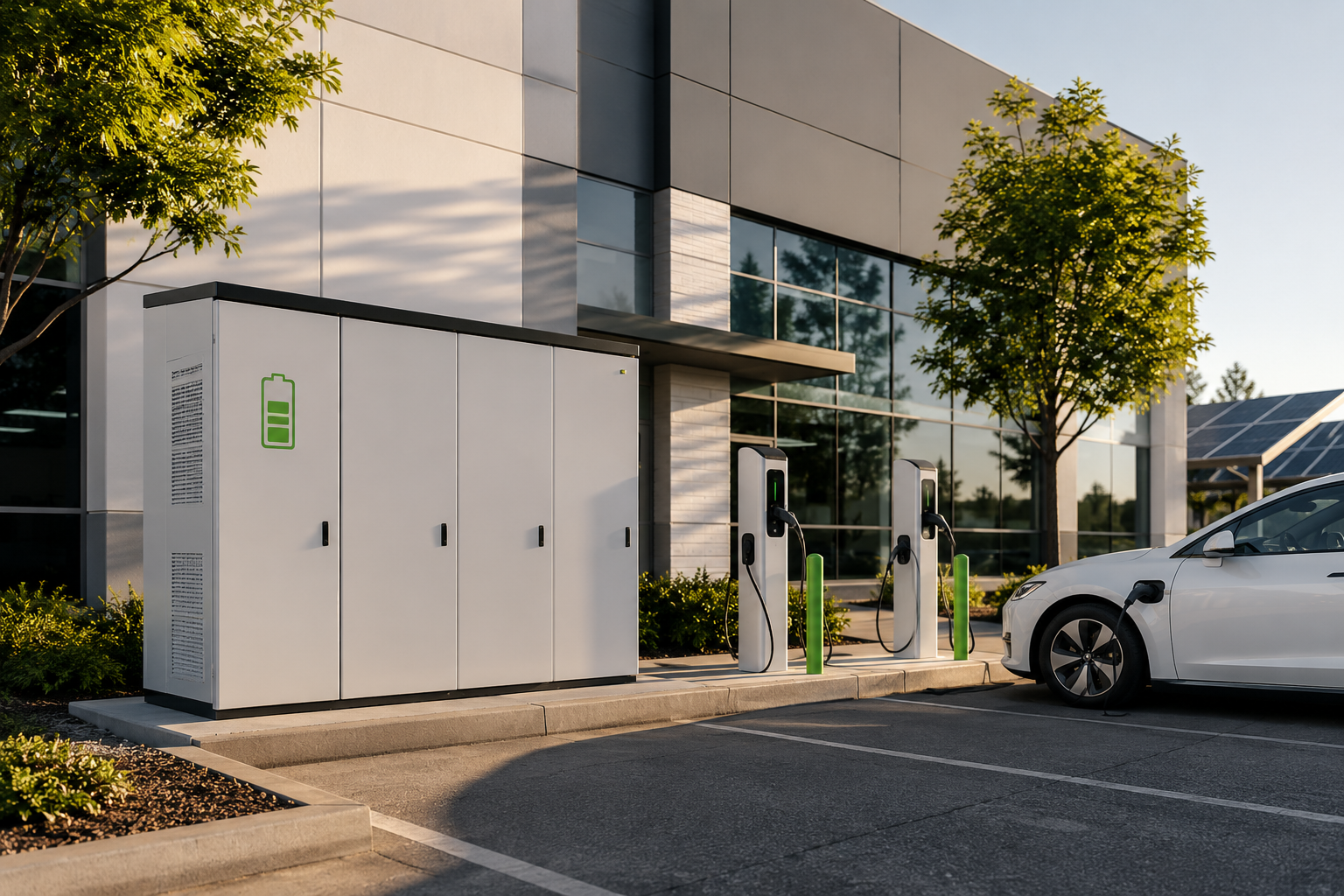
How battery storage incentives are changing the economics of EV infrastructure projects.
One of the biggest challenges commercial property owners face when evaluating EV infrastructure is cost.
Not just the charging equipment itself, but the broader infrastructure investment required to support long-term deployment. Between electrical upgrades, utility coordination, and future scalability, many projects can feel financially difficult before they even begin.
What many property owners still do not realize is that battery energy storage may open the door to incentives that can significantly improve project economics.
And in many cases, those incentives are receiving far less attention than EV chargers themselves.
The Incentive Conversation Is Evolving
A large portion of the EV infrastructure conversation has historically focused on charging station incentives. While those programs can be valuable, they are often tied to specific geographic requirements, utility programs, or qualifying zones.
That can create limitations for commercial properties that may not fall within those boundaries.
Battery energy storage changes the conversation.
Under current federal incentive structures, battery storage systems may qualify for substantial tax credits independent of EV charger eligibility requirements. That creates additional flexibility for commercial properties evaluating energy infrastructure investments.
For many operators, this is becoming an important part of long-term project planning.
Why Battery Storage Matters Financially
Battery systems are increasingly being viewed as more than backup power solutions. They are becoming financial infrastructure.
When paired with EV charging, battery storage can help commercial properties:
reduce peak demand charges
better manage energy usage
improve resiliency
support charging scalability
create more flexibility around deployment planning
The addition of tax incentives can further improve long-term return on investment by helping offset portions of upfront infrastructure costs.
For some properties, that can significantly change the feasibility of a project.
Why Many Property Owners Still Aren’t Looking at It
Part of the challenge is awareness.
A lot of commercial real estate conversations around EV infrastructure are still centered almost entirely on chargers themselves:
How many chargers?
What speed?
What hardware?
What incentives apply?
The broader energy strategy often receives less attention early in the process.
But as utility costs rise and charging demand grows, more property owners are starting to realize that energy storage may play a much larger role in long-term infrastructure planning than originally expected.
That includes the financial side of deployment.
The Shift Happening Across Commercial Real Estate
Commercial properties are increasingly evaluating infrastructure projects through a long-term operational lens instead of short-term installation decisions.
That shift includes:
energy management
operating cost predictability
infrastructure flexibility
future tenant expectations
long-term property modernization
Battery storage sits at the intersection of all of those conversations.
For many commercial operators, the question is no longer whether energy demand will change over the next decade. The question is how prepared their properties will be when it does.
What This Means for Property Owners
The commercial properties that understand how to strategically combine EV infrastructure, energy management, and available incentives may have a significant advantage moving forward.
Battery storage incentives are helping reshape the economics of EV deployment, especially for operators looking beyond the traditional charging model.
As infrastructure planning becomes more connected to long-term asset strategy, understanding the financial role of battery storage may become just as important as understanding the chargers themselves.