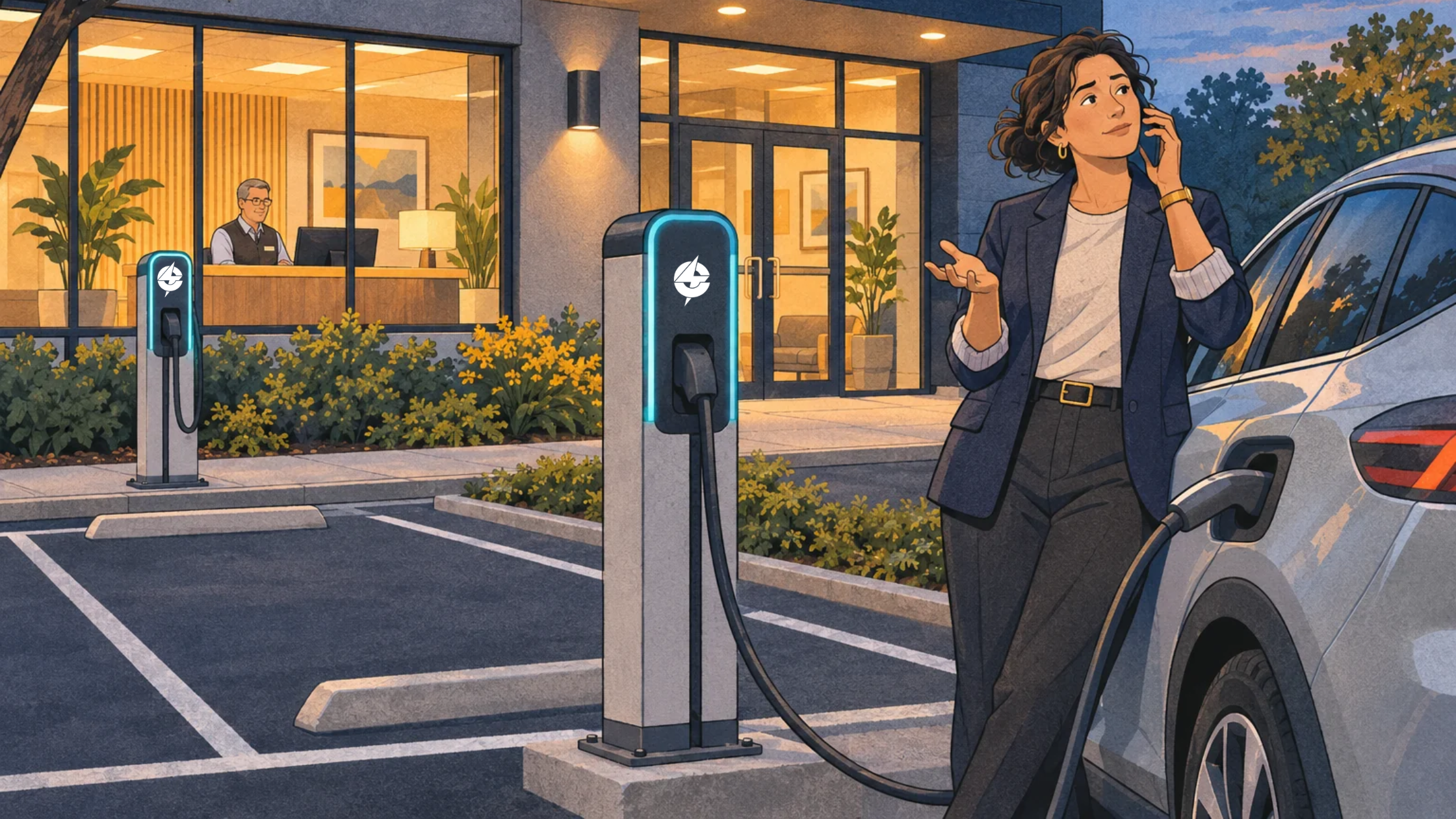
It’s Friday evening. A visitor plugs in, the charging session won’t start, and they ask the person at the front desk for help.
Does the front desk know where to send them? If the charger needs a repair, who arranges it? And who tells the property team when it’s back in service?
Those are easier questions to answer before the chargers go live. A short conversation with your charging provider can help everyone know what to do when a driver needs help or equipment needs attention.
Who notices when something stops working?
Start with what your provider can see. Can they tell when a charger goes offline? Does someone get an alert? What happens if the charger shows as available but drivers keep reporting failed sessions?
Ask what’s monitored, who reviews alerts, and when your property team will hear about an issue. The U.S. Department of Energy’s Alternative Fuels Data Center also recommends tracking uptime and usage. Those numbers help answer two different questions: Are the chargers available, and are people using them?
Where should drivers go for help?
A driver who can’t start a session needs an easy way to reach charging support. Someone who can’t get into a gated garage may need help from the property team. From the driver’s point of view, both problems get in the way of charging. Give people a clear route to help for each one.
Walk through it the way a first-time visitor would. Can they find the support contact at the charger? If they ask at the front desk, can staff point them to the right place? If they arrive after hours, is it clear whether they can access the garage?
Charli Charging provides installation, maintenance, and 24/7 customer support. Your property team can help by making that support easy to find and communicating local details such as parking rules, garage hours, and who can use the spaces.
Who handles maintenance and repairs?
A damaged charging cable and a blocked parking space can both put a charger out of use for a driver. One may need charging equipment service. The other may need someone on-site to clear the space. Think through both when you review your service agreement.
Ask who schedules maintenance, who arranges repairs, and how parts, labor, and warranty claims are handled. If work falls outside the agreement, clarify who approves the cost. It also helps to ask what the agreement says about response times, repair timelines, and uptime so everyone knows what to expect.
What happens if the first call doesn’t solve it?
Say a driver reports a charger that won’t start. The provider looks into it and determines that someone needs to visit the site. Who arranges that visit? Who gets the technician into the garage? Who lets your team know when the charger is ready to use again?
That’s the handoff to agree on. Before launch, write down who takes the initial report, who owns the next step, and who updates the property if the issue stays open. Include the site address and charger IDs so staff can quickly tell support which unit needs attention.
Keep those details somewhere the people on duty can find them. A one-page contact sheet can be more useful on a Friday evening than an agreement sitting in someone’s inbox.
Planning a new installation or reviewing the support behind the chargers you already have? Talk with Charli Charging about what ongoing service looks like at your property.