Why Commercial Properties Are Looking at Battery Storage Differently
How battery-backed infrastructure can reduce operating costs and improve energy flexibility.
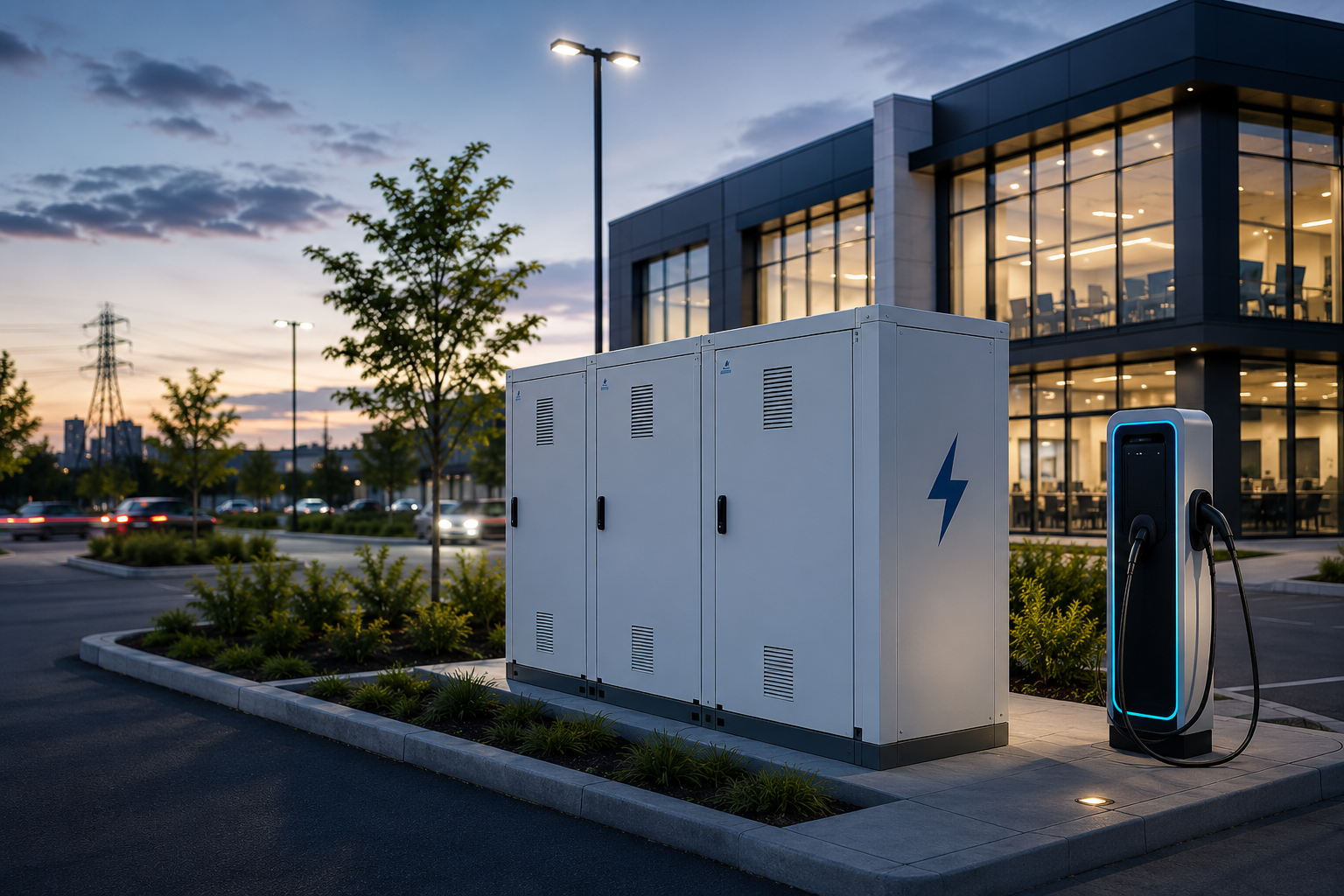
How battery-backed infrastructure can reduce operating costs and improve energy flexibility.
For a long time, battery storage was viewed as backup infrastructure. Something you used during outages or emergencies. That conversation is changing quickly.
Commercial property owners are starting to look at battery storage through a different lens: operational savings, energy flexibility, and long-term infrastructure strategy.
As utility costs continue to fluctuate and demand for EV charging grows, batteries are becoming less about emergency power and more about controlling energy costs in a smarter way.
The Cost Problem Most Properties Are Facing
Many commercial properties already deal with expensive demand charges from utilities. These charges are based on periods of peak electricity usage, not just overall consumption. In some cases, a short spike in energy demand can significantly increase a monthly utility bill.
That becomes even more important when EV charging enters the picture.
Fast chargers require substantial power, especially at retail centers, fleet locations, multifamily properties, and commercial campuses where multiple vehicles may charge at the same time. Without the right infrastructure strategy, operating costs can rise quickly.
This is one reason battery storage is gaining traction.
How Battery Storage Changes the Equation
Battery systems allow properties to store energy when rates are lower and use that stored power during periods of high demand. This approach can help reduce peak demand charges and create more predictable operating costs over time.
In practical terms, the property is not always pulling maximum power directly from the grid during expensive periods.
Battery-backed systems can also help properties:
improve energy resiliency
support EV charging deployment
reduce strain during peak usage periods
better manage long-term energy planning
For many operators, the conversation is becoming less about sustainability messaging and more about operational efficiency.
Why This Matters for EV Charging
One of the biggest concerns commercial property owners have around EV infrastructure is cost. Not necessarily the charger itself, but the broader electrical upgrades and long-term energy impact associated with deployment.
Battery storage can help address part of that challenge.
Instead of viewing charging infrastructure as a standalone expense, more properties are starting to evaluate charging and energy storage together as part of a larger energy strategy. In some cases, that combination can improve project economics while creating additional operational flexibility.
This is especially relevant as more tenants, customers, and fleet operators expect charging access to become part of the modern property experience.
The Shift Happening in Commercial Real Estate
Commercial real estate is entering a period where energy strategy is becoming part of asset strategy.
Properties are no longer evaluated only on location and square footage. Operators are increasingly thinking about:
infrastructure readiness
long-term operating expenses
tenant expectations
future energy demands
modernization opportunities
Battery storage is becoming part of that conversation because it gives properties more control over how energy is used, managed, and deployed.
That shift is still early, but momentum is building.
What This Means for Property Owners
Battery storage is no longer just a resiliency tool. For many commercial properties, it is becoming a financial and operational consideration tied directly to long-term infrastructure planning.
As EV adoption continues to grow and utility costs remain unpredictable, the properties that understand how to strategically manage energy may be in a much stronger position over the next several years.
If you're evaluating EV charging for your property, understanding the economics behind battery storage is becoming just as important as the chargers themselves. Let's talk about what this looks like for your property.