Why Workplace EV Charging Is Becoming an Employee Retention Tool
Employee retention conversations often focus on compensation, flexibility, professional development, and workplace culture.
Transportation costs are increasingly becoming part of that discussion.
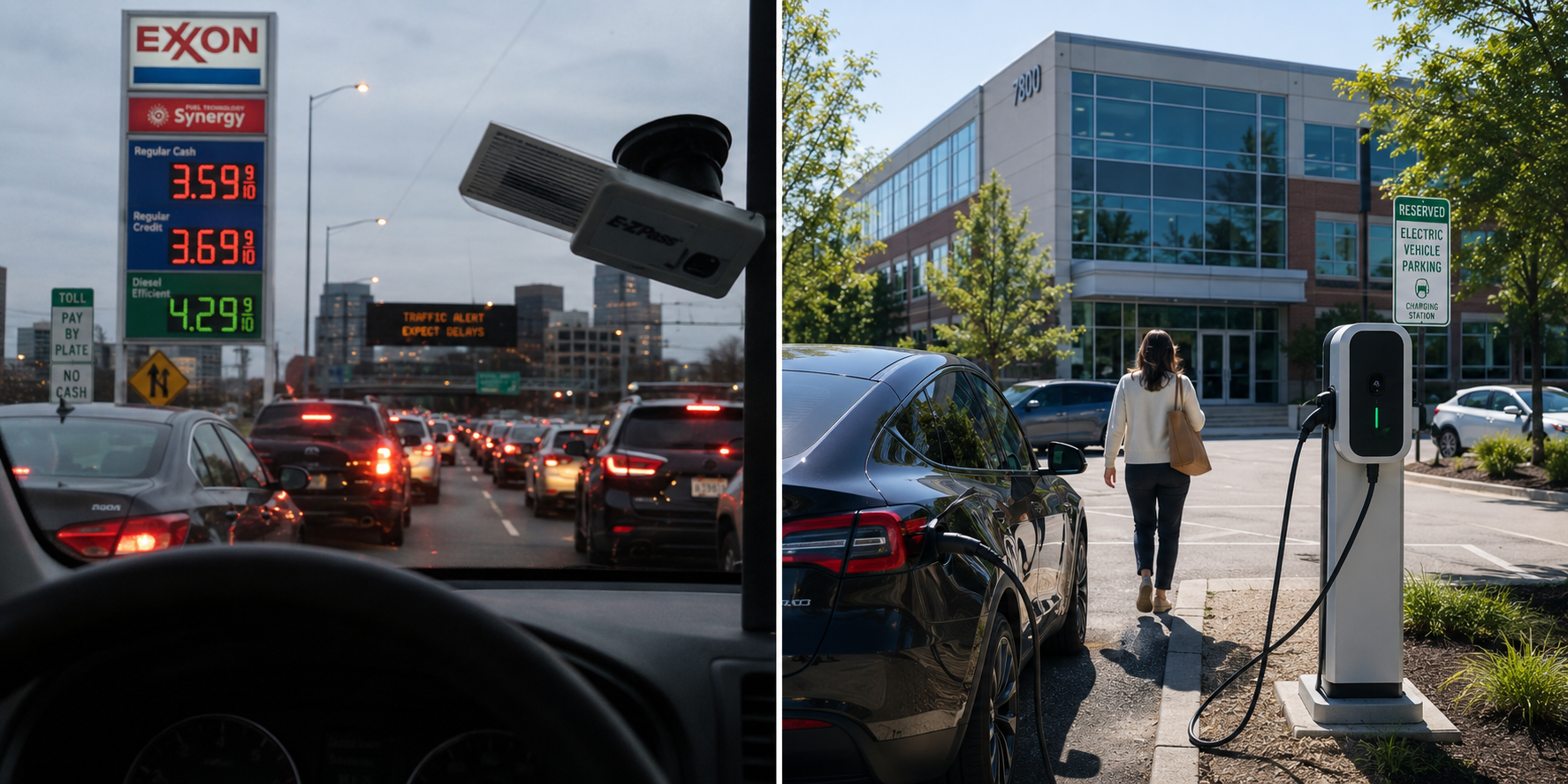
As organizations expand return-to-office expectations, employees are once again absorbing the daily costs of commuting. Fuel, parking, tolls, vehicle maintenance, and charging expenses all affect how workers evaluate the overall value of their employment experience.
Employers cannot control every aspect of an employee's commute. They can, however, influence the convenience and cost of getting to work.
Workplace EV charging is emerging as one way organizations are addressing that challenge.
The Cost of Commuting Has Become a Workplace Consideration
For many employees, commuting expenses represent one of the largest recurring costs associated with their job.
Several years of remote and hybrid work changed expectations. Employees became accustomed to spending less time and money traveling to and from the office. As organizations bring people back into physical workplaces, transportation costs have returned to the forefront.
Leaders often evaluate return-to-office policies through the lens of productivity, collaboration, and organizational culture. Employees frequently evaluate those same policies through a different lens: time, convenience, and personal expense.
That difference in perspective can influence retention, recruitment, and employee satisfaction.
Benefits Packages Are Expanding Beyond Traditional Perks
Employers have long used benefits to improve retention.
Health insurance, retirement plans, professional development opportunities, and wellness programs remain important components of the employee experience. Organizations are also paying closer attention to benefits that address practical day-to-day challenges.
Transportation falls into that category.
Employees generally place a high value on benefits that simplify their routines, reduce expenses, or save time. Workplace charging can support all three objectives for EV drivers.
An employee who can charge during the workday spends less time searching for public chargers and may reduce their overall transportation costs. Those savings can accumulate over months and years.
Convenience Matters
Employee benefits do not always need to be complex to be effective.
Convenience often plays a significant role in how employees perceive workplace value.
Consider two employers operating in the same market. Both offer similar compensation, similar responsibilities, and similar workplace environments. One provides workplace charging while the other does not.
For employees who drive electric vehicles, that difference may influence where they choose to work and whether they remain with an organization over time.
Workplace charging becomes part of the overall employee experience in the same way that parking availability, transit access, and flexible scheduling influence daily work life.
Supporting Return-to-Office Strategies
Organizations investing in return-to-office initiatives often seek ways to make office attendance more appealing and practical.
Workplace charging can support those efforts by removing a common source of friction for EV drivers.
Employees who know they can charge while working may feel more comfortable commuting longer distances or attending the office more frequently. The workplace becomes a location where productive work and vehicle charging occur simultaneously.
That convenience creates value without requiring additional time from the employee.
For employers, workplace charging can complement broader efforts to improve the office experience and encourage participation in in-person work environments.
Property Owners Are Seeing Increased Interest
Commercial property owners are also encountering growing demand for workplace charging infrastructure.
Many tenants view EV charging as a desirable amenity when evaluating office space. Property owners who invest in charging infrastructure may strengthen tenant attraction and retention efforts while preparing their properties for future transportation trends.
Tenant expectations continue to evolve. Buildings that support employee convenience often gain a competitive advantage in leasing discussions.
Workplace charging increasingly falls into that category.
Looking Ahead
Employee retention remains one of the most important challenges facing organizations across industries.
Leaders continue to evaluate compensation strategies, workplace flexibility, and organizational culture. Transportation costs deserve consideration as part of that broader conversation.
Employees experience those costs every day. Employers feel the impact through retention and recruitment. Property owners encounter it through changing tenant expectations.
Workplace EV charging will not solve every workforce challenge. It can, however, address a practical concern that affects a growing number of employees and contribute to a more convenient and supportive workplace experience.
Organizations that recognize the connection between transportation and employee satisfaction will be better positioned to adapt as workplace expectations continue to evolve.